How to Clear Goods in Nigeria: A Step-by-Step Guide
Everything importers need to know about the Nigerian customs clearing process.
Read More →Expert guidance on Nigerian customs, import/export regulations, and logistics best practices.
Stay ahead of regulatory changes and industry developments.
Everything importers need to know about the Nigerian customs clearing process.
Read More →Avoid costly delays and penalties with these practical import tips.
Read More →A practical breakdown of how import duties are calculated in Nigeria.
Read More →By Hiran Nigeria Limited • 8 min read
Importing goods into Nigeria involves navigating a structured customs process governed by the Nigeria Customs Service (NCS). Understanding each step helps importers avoid costly delays, demurrage charges, and compliance penalties.
Before your cargo arrives, you need the following documents:
The PAAR is generated by the NCS eTrade system based on your shipping documents. It provides a preliminary duty assessment before your cargo arrives. Your clearing agent submits the required documents to generate the PAAR.
Once your cargo arrives, your clearing agent files the SGD on the NCS eTrade platform. This is the formal customs entry document that triggers the assessment and examination process.
The NCS assesses applicable import duties based on the HS code of your goods, the CIF (Cost, Insurance, Freight) value, and the applicable tariff rate. Duties are paid through approved government payment channels.
Depending on the risk profile of your cargo, NCS may conduct a physical examination. Your clearing agent coordinates this process and ensures all documentation is available for the examining officer.
After duty payment and examination clearance, the NCS issues a release order. Your clearing agent collects the delivery order from the shipping line and coordinates cargo exit from the terminal.
Engage a licensed clearing agent early — before your cargo arrives. Pre-arrival processing significantly reduces port dwell time and demurrage costs.
By Hiran Nigeria Limited • 6 min read
After 40 years of clearing cargo at Nigerian ports, we've seen the same costly mistakes repeated by importers — from first-timers to experienced businesses. Here are the most common ones and how to avoid them.
Using the wrong Harmonized System (HS) code for your goods can result in incorrect duty assessment, cargo holds, and penalties. Always verify the correct HS code with your clearing agent before shipment.
Missing documents — especially the Form M, CCVO, or required permits — are the leading cause of cargo delays at Nigerian ports. Ensure all documents are complete, accurate, and consistent before your cargo departs origin.
NAFDAC, SON, and NESREA permits must be obtained before your cargo arrives. Applying after arrival leads to extended port dwell time and significant demurrage charges.
Declaring a lower value than the actual transaction price is a customs offence. NCS has sophisticated valuation systems and regularly benchmarks declared values against market prices. The penalties far outweigh any perceived savings.
Only NCS-licensed clearing agents can legally file customs declarations. Using an unlicensed agent exposes you to legal liability and cargo seizure. Always verify your agent's NCS license and CRFFN registration.
The cost of getting it right the first time is always lower than the cost of fixing mistakes at the port. Partner with a licensed, experienced clearing agent from the start.
By Hiran Nigeria Limited • 7 min read
One of the most common questions importers ask is: "How much will I pay in customs duties?" The answer depends on several factors. Here's a practical breakdown.
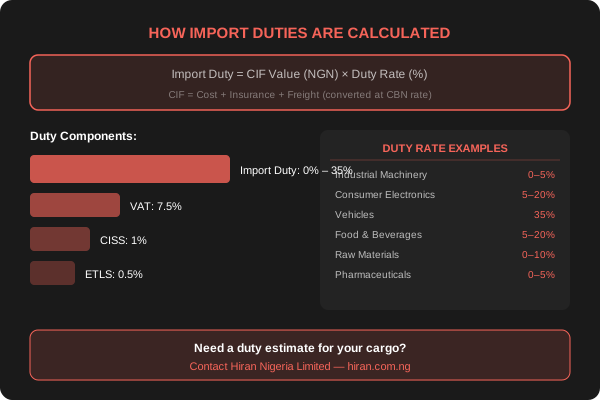
Nigerian import duties are calculated on the CIF (Cost + Insurance + Freight) value of goods, converted to Naira at the CBN exchange rate. The formula is:
| Cargo Type | Typical Duty Rate | Notes |
|---|---|---|
| Industrial Machinery | 0% – 5% | Encouraged imports |
| Consumer Electronics | 5% – 20% | HS code dependent |
| Vehicles | 35% | Plus levy charges |
| Food & Beverages | 5% – 20% | NAFDAC permit required |
| Raw Materials | 0% – 10% | Supports local production |
Duty rates are subject to change with each federal budget. Always confirm current rates with your clearing agent before finalizing import costs.